You Don't Lose Yourself All At Once
Hi, I have a story to tell you *clears throat*.
It was the best of times, it was the worst of times... but for Glossier, it was just one.
Nine stores closing, new CEO, layoffs, and a brand that was once worth $1.2 billion trying to find its way back to itself. But I’m not here to talk about whether Glossier survives. You can Google and pull up pages of think pieces on that. I want to use this to chat about something else - the kind of thing that's relevant whether you're building a brand or building yourself when the world keeps telling you to be more, do more, perform more.
But this isn't really a Glossier story. It's an identity story.
Let's take it back.
It's 2010. Emily Weiss is a styling assistant at Vogue, waking up at 4am to work on her blog before going to work. Whew, passion. The blog is Into the Gloss, and the concept was simple: bring women into other women's bathrooms. Her "Top Shelf" series had beauty industry insiders opening their medicine cabinets and talking about what they actually used. Honest conversation. Real products. Easy breezy.
The comment section was just as alive as the content. Readers shared their own routines, provided feedback and debated products in real time. Into the Gloss built up a kind of collective knowledge around beauty that didn't really exist anywhere else at the time. When Emily eventually asked that community what they'd want in a dream face wash, they told her. She listened, executed, and conceived the Milky Jelly Cleanser.
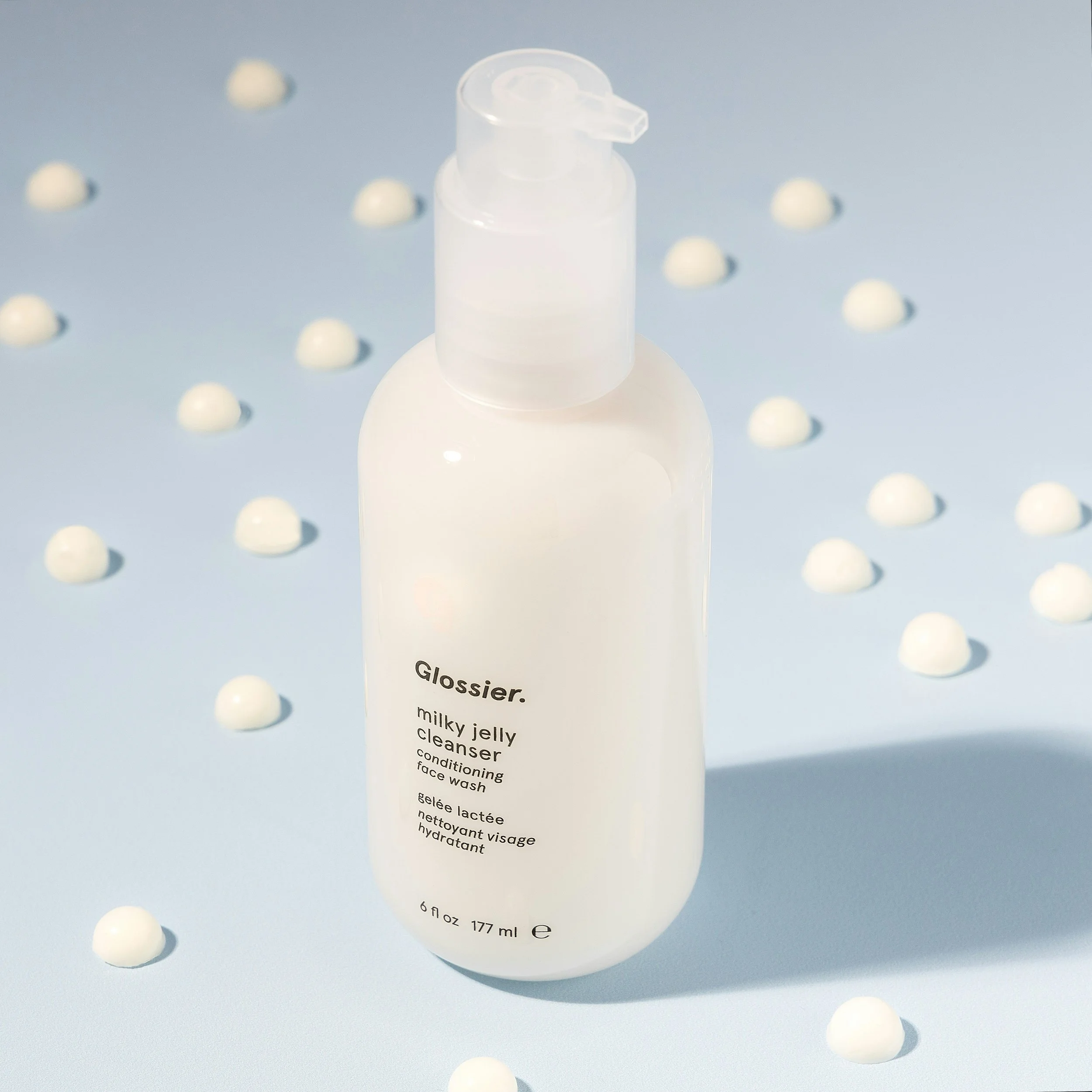
Cute and simple, right?
In 2014, she launched Glossier with four products and a clear philosophy: skin first, makeup second. Not about transformation or covering anything up, just about looking like you, well-rested, healthy, like you actually take care of yourself.
It worked. By 2019, Glossier was valued at $1.2 billion, adding over a million new customers a year, with word-of-mouth driving 70% of online sales. That kind of loyalty is genuinely hard to build.
And as it turns out, easy to lose.
The momentum trap
When a brand reaches that level of momentum, the pressure to scale comes fast and from every direction. New categories, wholesale deals, physical retail, collaborations... the opportunities are real. And then the investors come, and founders jump on it. I get it. They believe in you: in your passion, in your product. But here's the thing that gets forgotten when that money starts coming in: investors want returns.
If you followed what happened with Ami Cole, a beauty brand built on a specific, loyal community, you already know how this story goes. Investor interest comes in, growth gets prioritized, and the focused founder loses the wheel and the whole thing spins out of control.
So Glossier grew… and grew… until they didn’t.
By January 2022, they cut a third of their staff, and by May, Emily Weiss had stepped down as CEO.
So they did what any brand in their situation would do: They moved into Sephora, opened twelve stores, and started launching faster and broader.
Bruh.
Foundation, body care, flavored lip balms, and an entire brightly-colored cosmetics line called Glossier Play.
But remember: a skin-first, community-led identity is what built this brand.
The old Glossier didn't feel like something you stumbled across at a store counter. It felt intimate, like a small society you could only get into through a friend. The way you found it was key to why you trusted it.
And I want to be clear: expanding into retail isn't inherently bad, and neither is adding new products. But "available everywhere" and "intimate society" don't pair well in the same brand. The more Glossier extended into new spaces, the further it moved from the identity that made it’s core customer love it.
An IG comment explained it plainly: "I remember when the brand launched, and it felt like this incredible outflow from the comment section of Into the Gloss. Every product for the first handful of years felt like it was a collective creation of us commenters on that blog. It was so fun."
Glossier’s new CEO Colin Walsh says he's going back to what worked. In the process they’ve has closed nine of twelve stores, skimmed down product lines and getting back to their core customer. That sounds like an identity conversation... we'll see if the execution follows.
Except, the fragrance direction is what I find most interesting, because fragrance is one of the fastest growing industries in beauty. Glossier’s original fragrance, Glossier You, came out in 2017 - designed to smell like your skin, not like a perfume. Personal, subtle, very on-brand.
One fragrance for nine years.
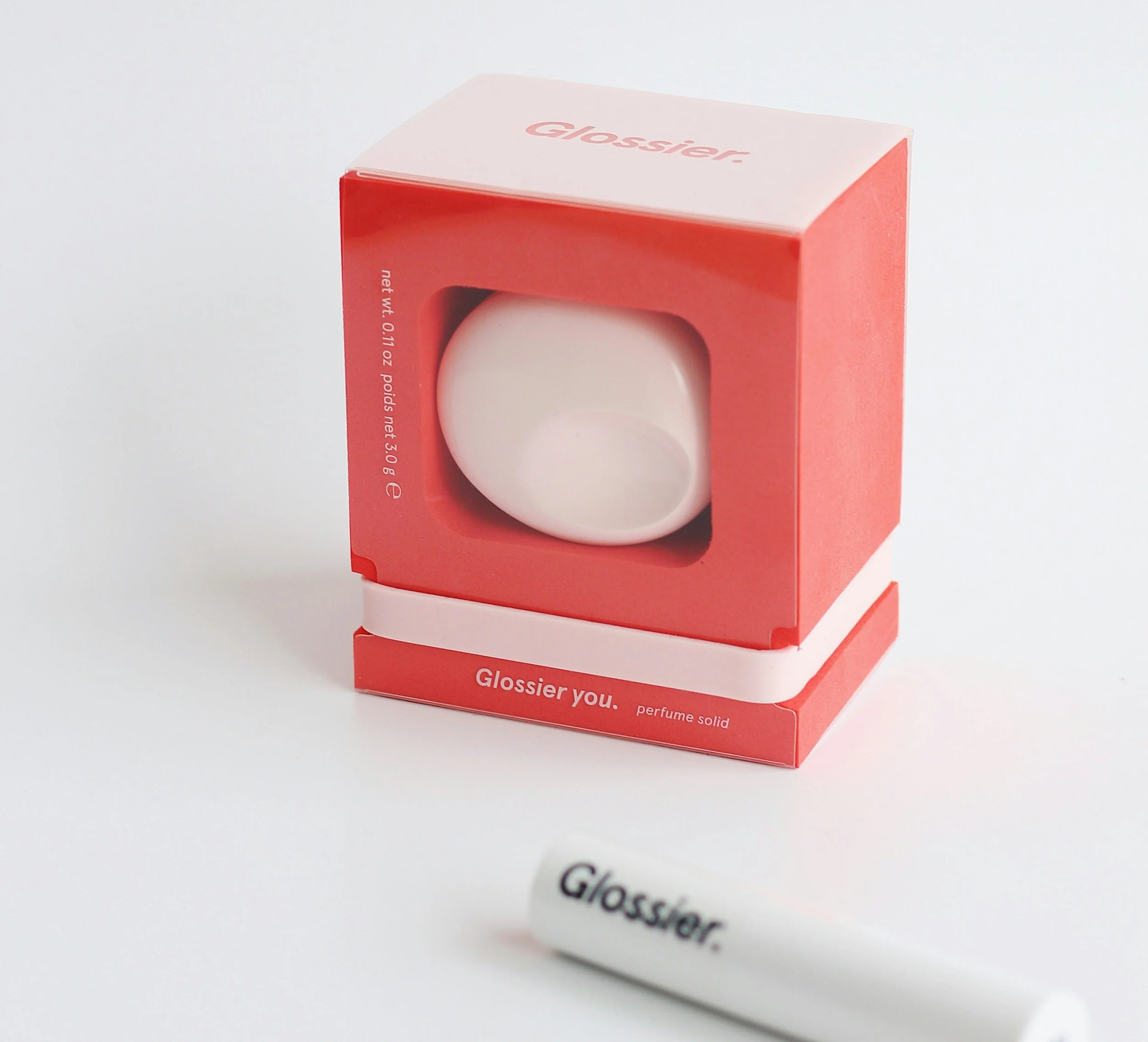
Then in under six months they dropped three new perfumes - You Doux, You Rêve, You Fleur, You Soie - and a body mist. This reads like Glossier Play all over again.
Loyal customers are already in the reviews saying the original can't be beat and they don't understand the offshoots.
What does this have to do with you?
I'm glad you asked.
At some point, if you're building something that's working, you'll have to decide how to scale it and how fast. A new product line, a new audience, a new channel.
The question isn't whether to grow. It's whether you actually know what your brand is beyond what you sell. What it means to the person buying it. What it makes her feel about herself.
If you know that, awesome! Every growth decision should either reinforce it or leave it alone. If a new opportunity requires your brand to be something it isn't already, that's not an automatic no, but it is a reason to be very clear about what you're trading for it.
If you don't know the answer yet, that's the real work. And I hope you get clear on it before the next launch, before the next product, before the next pitch deck telling you that you should be in three new markets by Q3.
The brands that last aren't the ones that said yes to every opportunity that made financial sense. They're the ones that stayed specific about what they stood for, even when the pressure to expand was completely reasonable. Saying no to things that water down your identity is a strategy.
It's too easy to wake up one day and realize you've drifted. Not because anyone pushed you off course, but because you kept saying yes to things that looked good, kept adjusting yourself for rooms you thought you wanted to be in, kept watching what was working for everyone else and quietly folding pieces of it into who you were presenting yourself to be.
Social media makes this so much worse. There is always a trend to chase, a format to copy, a version of yourself “they” say will perform better than the one you actually are. And it is exhauussssting. You’re always going to be a step behind something that was never yours to begin with.
I know.
But babes, there's no traffic in your lane. The version of you that is fully, specifically, unapologetically yourself is the one nobody else can replicate or compete with. Your personality, your perspective, the specific way you see things... that's not something to dial down. YOU are the whole asset. It's what puts you in front of the right people, in the right rooms, doing the right work. Not because you engineered it, but because alignment tends to find you when you stop performing and start just being.
One of my favorite books is The Alchemist by Paulo Coelho. And without dropping the whole plot, it follows a boy who leaves everything familiar to chase treasure. The whole journey ends up teaching him that what he was looking for was never far away and about the lengths we go through to chase things outside of ourselves, when what we actually need, and are searching for, is usually a lot closer to home.
Maybe that's what Glossier is doing right now. And maybe it's what some of us need to do too, not a reinvention, but an un-becoming. Shedding everything that got layered on for the wrong reasons, until what's left is the thing that was real from the start.